Managing Contacts in the Parties Tab
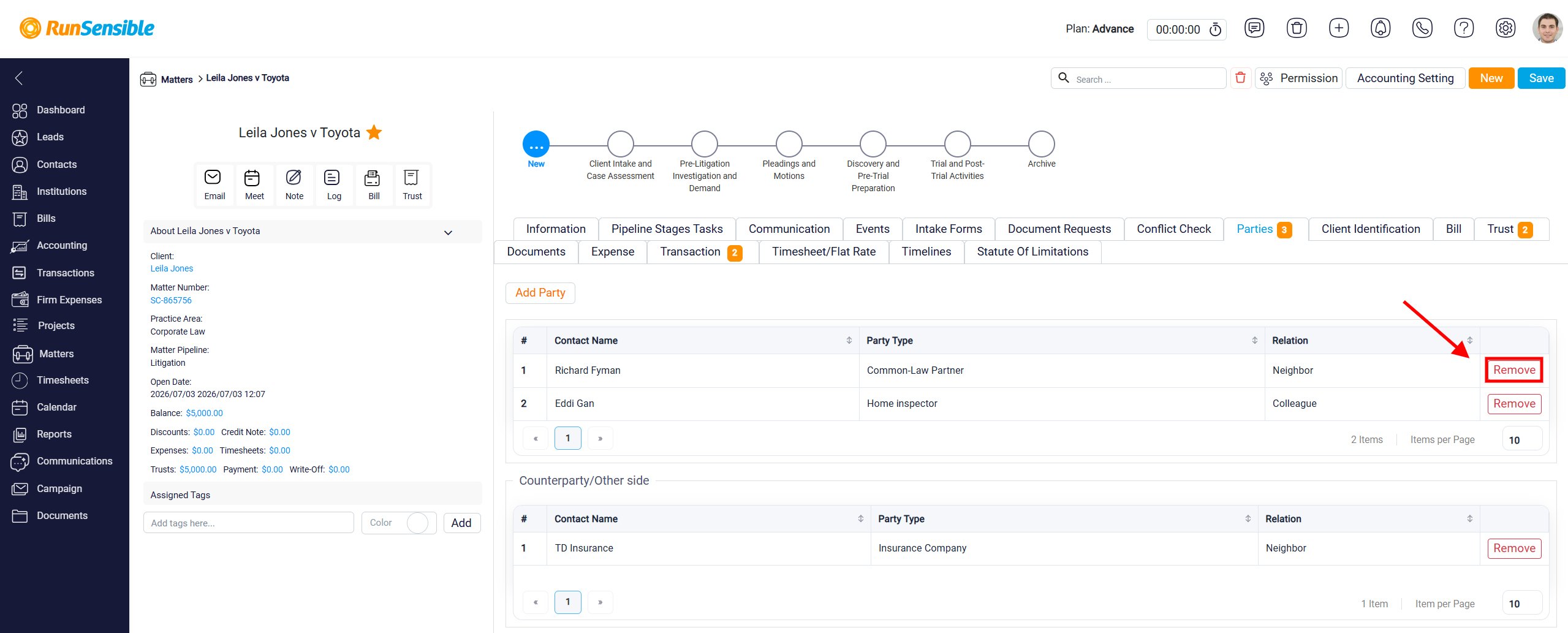
The Parties tab is used to add and manage the contacts and institutions connected to a matter. It keeps all relevant people and organizations in one place, such as clients, witnesses, attorneys, experts, counterparties, companies, family members, or anyone else involved in the case. This tab helps you clearly track who is involved in the matter, what role they have, and how they are connected to the case. When you open the Parties tab, you will see a list of all parties and counterparties connected to the matter.
Parties can be added directly from the Parties tab. They can also be added automatically when a contact or institution is used while creating or completing a document template. In that case, the selected contact is added to the Parties tab with the same role and relationship assigned during the document process.
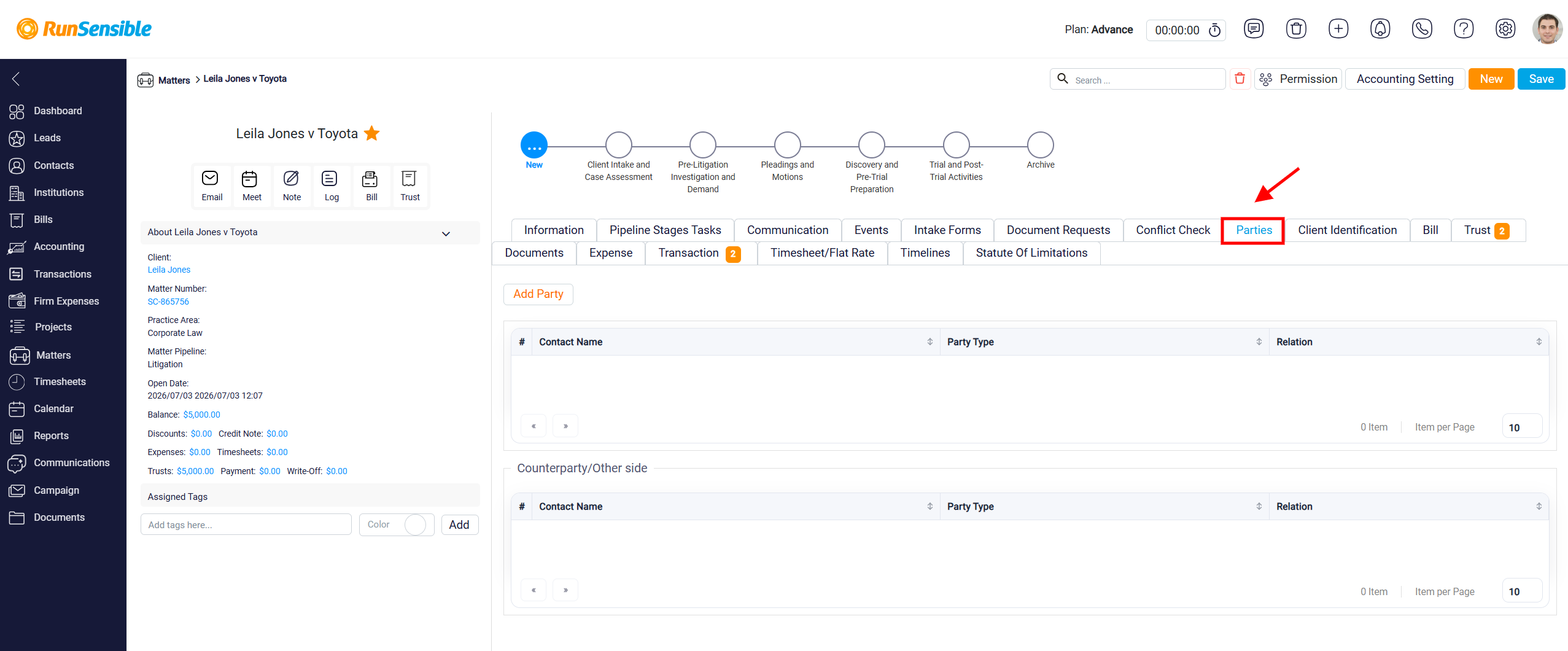
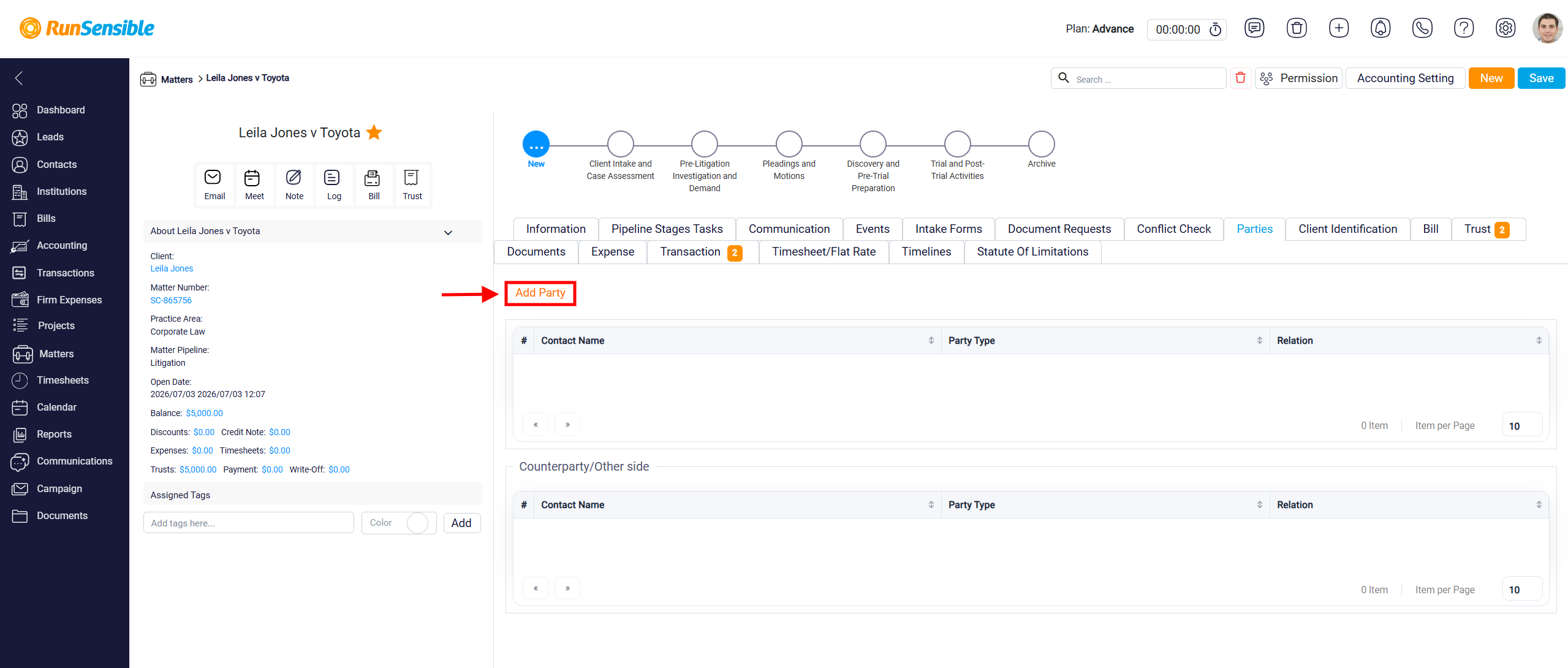
To add a party to a matter, click Add Party in the Parties tab.
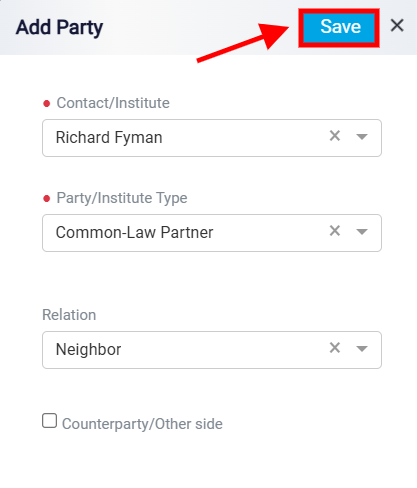
This opens the Add Party panel, where you can select the person or institution, choose their party type, define their relationship to the matter, and mark whether they belong to the other side of the case.
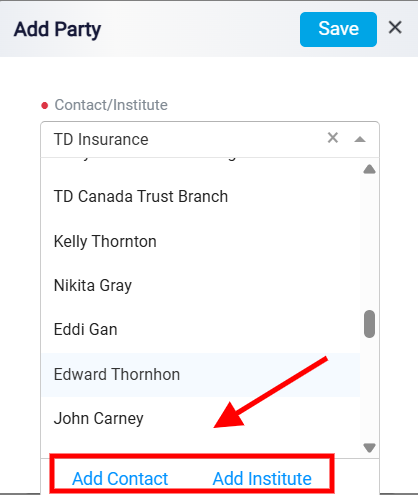
The Contact/Institute field is used to choose the person or institution you want to add. This field is required, so you must select a contact or institution before saving the party. The person or institution must already exist in the system. To modify any contact or institution in this dropdown, please update it in the Contacts or Institutions section.
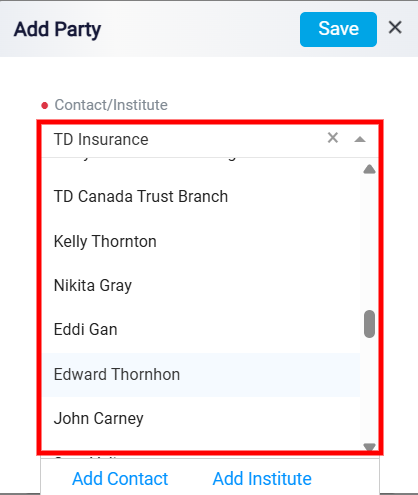
If person or institution is not listed, use the Add Contact or Add Institute option at the bottom of the dropdown to create the record first, then continue adding them as a party. Parties must be added one at a time. The Contact/Institute dropdown does not allow you to select multiple contacts or institutions at once, so each party should be added separately.
The parties added here are also used in the system’s conflict of interest check. When you create a new matter for a contact or institution, the system may check existing party records to identify possible conflicts. If the selected client or related person has already been added as a party in another matter, the system may show a conflict warning so you can review the connection before continuing.
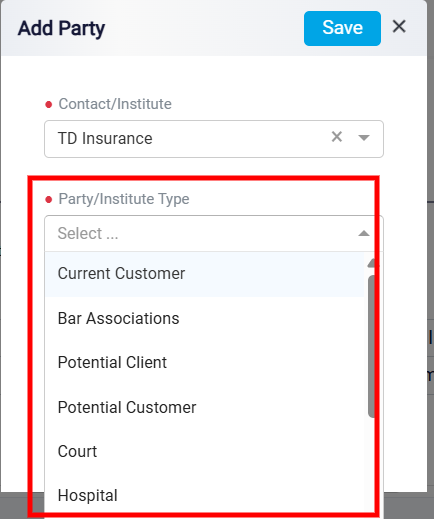
The Party/Institute Type field is also required. This field identifies the role or category of the selected contact or institution in the matter. For example, the party type may describe the person as an attorney, client, witness, expert, clinic, company, or another type of participant in the case. When you open the Party/Institute Type dropdown, you can choose from the existing party types saved in the system.
If the correct type is not listed, click Add Party Type at the bottom of the dropdown.
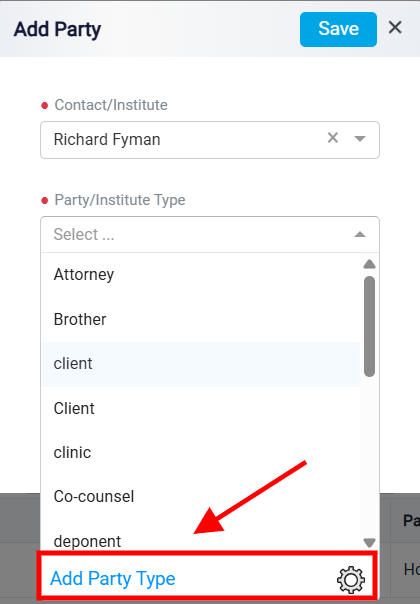
This opens a panel where you can create a new party type by entering the type name and selecting a color. After Saving it, the new party type becomes available in the dropdown and can be used when adding parties to a matter.
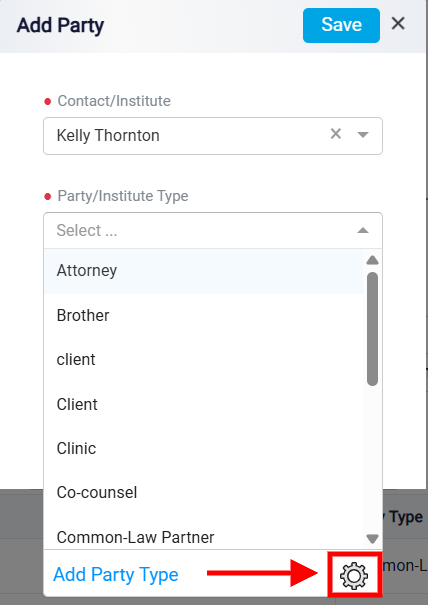
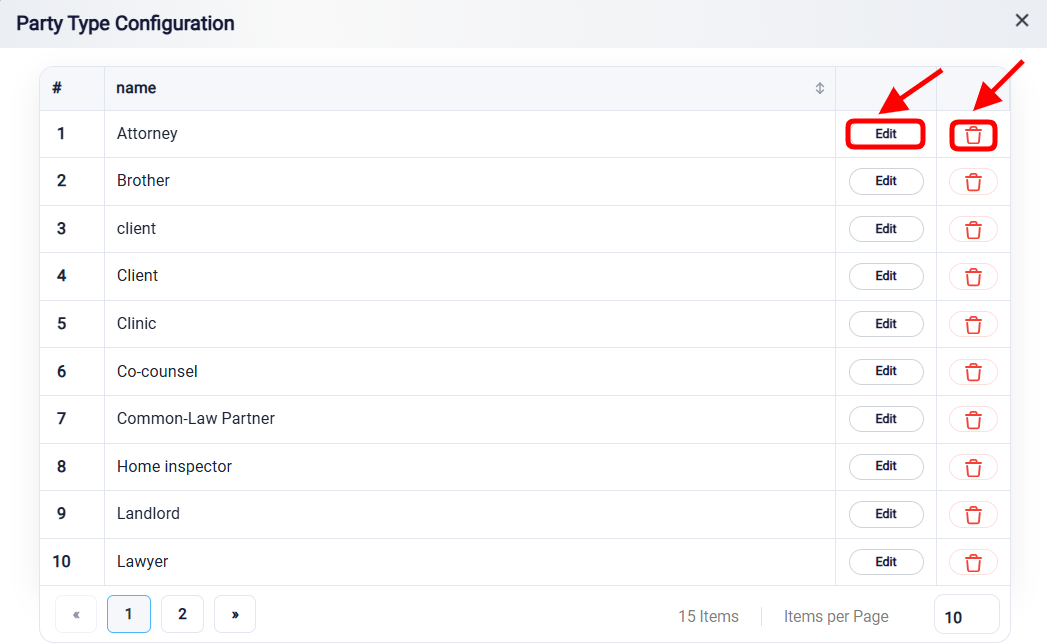
There is a Settings button next to Add Party Type. It allows you to view existing party types and edit or remove them as needed.
The Relation field is used to describe how the selected contact or institution is related to the matter, the client, or another involved party. For example, the relation may be spouse, colleague, family member, business partner, consultant, or another relationship type.
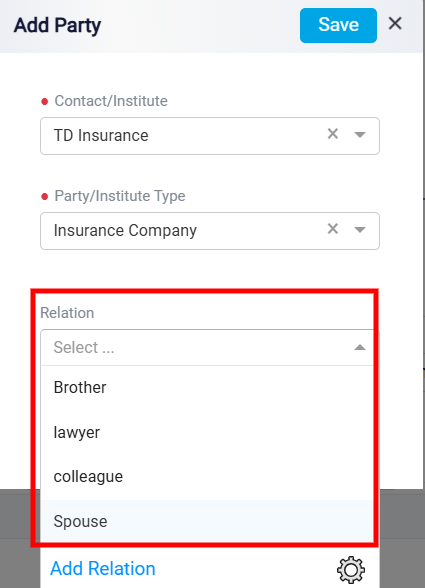
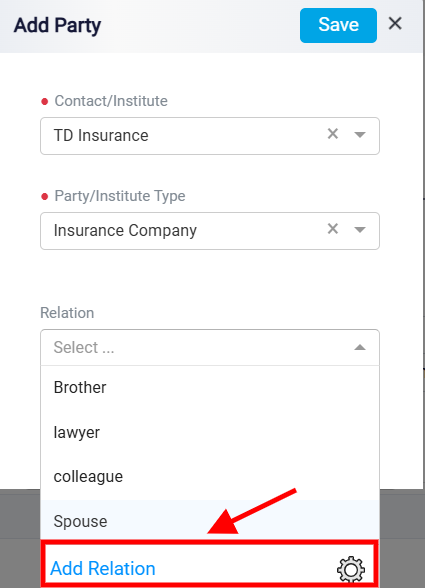
If the relationship you need is already listed, select it from the Relation dropdown. If it is not listed, click Add Relation at the bottom of the dropdown.
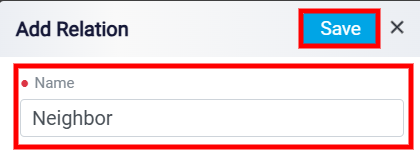
This opens the Add Relation panel, where you can enter the name of the new relationship type. After entering the relation name, click Save. The new relation will then be available for selection in the Relation dropdown.
There is a Settings button next to Add Relation.
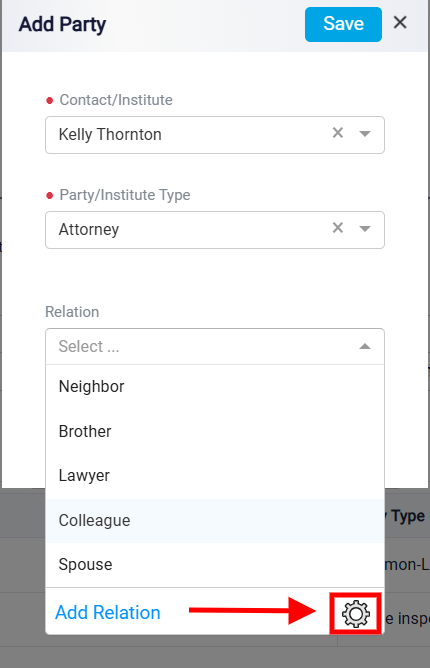
It allows you to view existing relations and edit or remove them as needed.
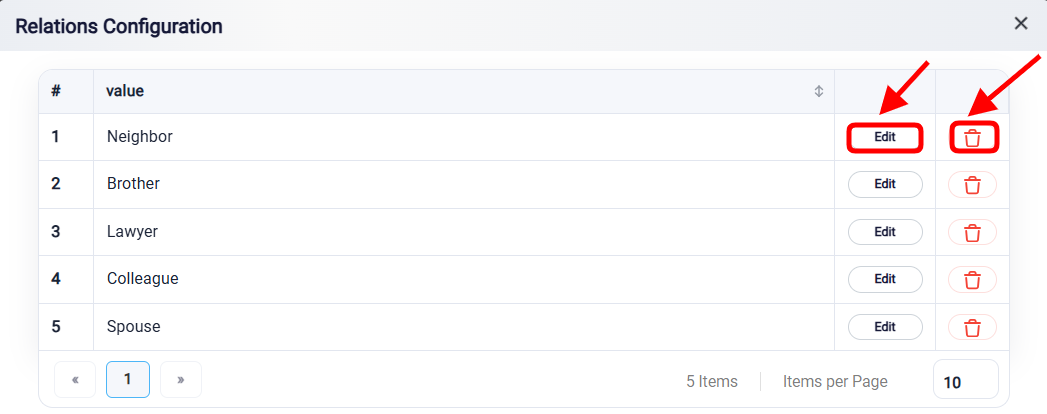
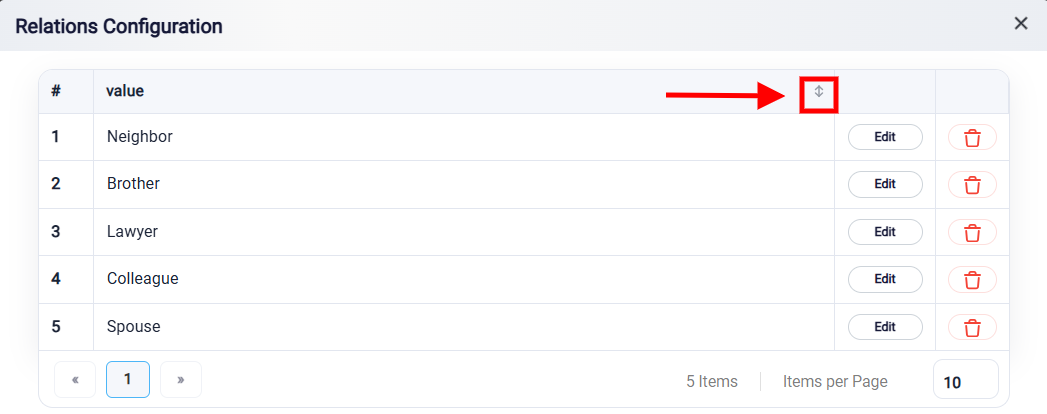
You can also sort the list in ascending or descending order.
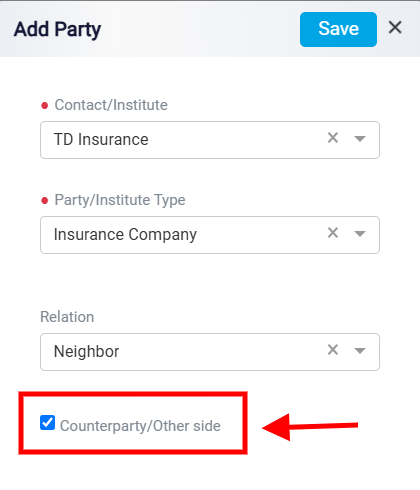
In the Add Party panel, the Counterparty/Other side checkbox is used to identify whether the selected contact or institution belongs to the opposing side of the matter. Select this checkbox if the party is not connected to your client’s side of the case. This may include an opposing party, opposing counsel, another organization, or any person or institution involved on the other side of the matter.
If the party is connected to your client’s side, leave the checkbox unchecked. This keeps the party in the main party list rather than placing them under the Counterparty/Other side section.
After selecting the contact or institution, choosing the party type, adding the relation if needed, and deciding whether the party belongs to the other side, click Save in the top-right corner of the Add Party panel. Once saved, the selected contact or institution is added to the matter’s Parties tab.
After parties are saved, they appear in the Parties tab in table format. This section shows the contacts and institutions that have already been added to the matter. The table layout makes it easy to quickly review who is connected to the case, what role they have, and how they are related to the matter. The main table shows the parties connected to your client’s side of the matter. Each row represents one saved party. The table includes the party’s contact or institution name, party type, and relation. This helps users understand the party’s involvement in the matter without opening each record individually.
Below the main party table, there is a separate section called Counterparty/Other side. This section lists the parties that were marked as belonging to the opposing side or another side of the matter. Keeping these records separate helps users clearly distinguish between parties connected to the client’s side and parties connected to the other side of the case.
Both the main party table and the counterparty table show similar information, including Contact Name, Party Type, and Relation. The Contact Name shows the person or institution added to the matter. The Party Type explains their role in the case. The Relation shows how that party is connected to the matter or client.
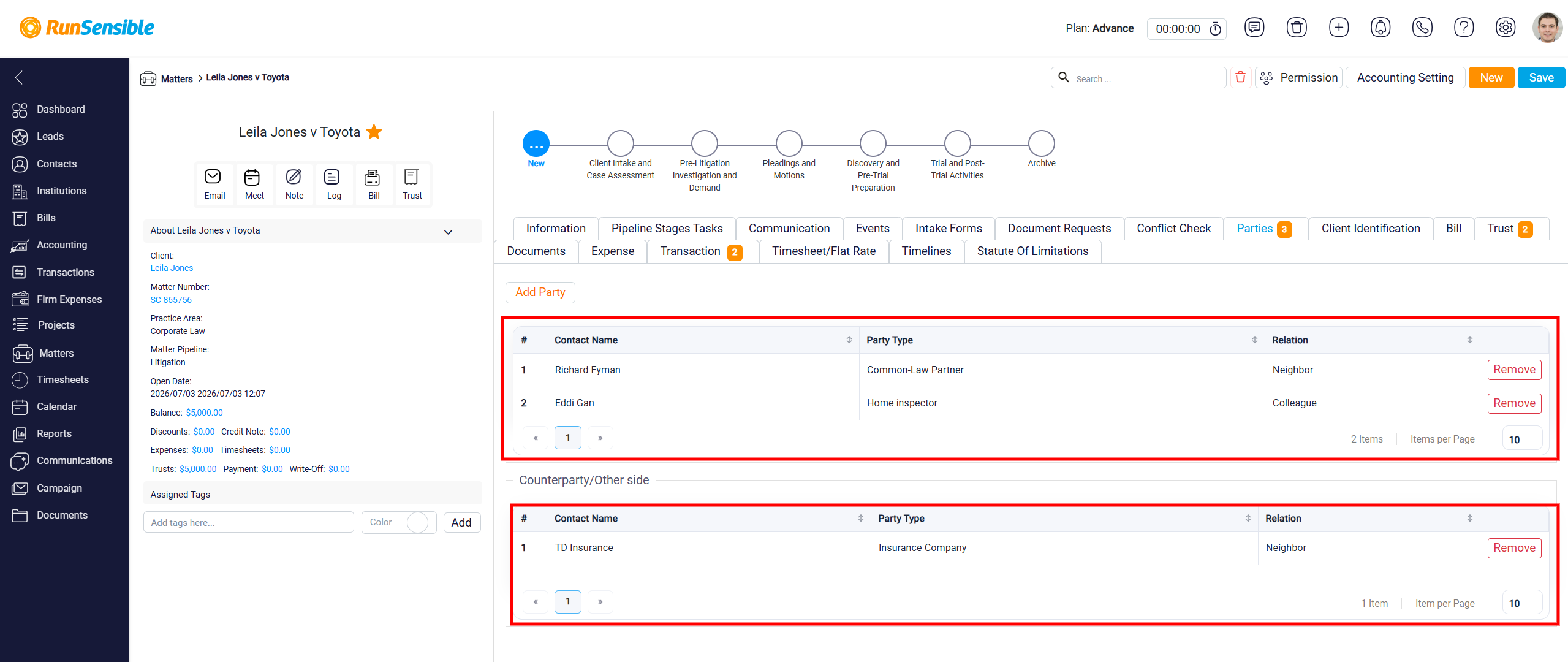
Each saved party row includes a Remove button on the right side. Use this button if a party was added by mistake or is no longer needed in the matter. Removing a party deletes that party’s connection from the matter’s Parties tab, but it does not delete the original contact or institution record from the system.